
Common symptoms we are called about
Electrical faults tend to announce themselves in a small number of ways. Any of the following is worth investigating rather than living with.
- An RCD that trips, sometimes at the same time each day
- A breaker that trips whenever a particular appliance is used
- Sockets that have stopped working in one room or on one wall
- Lights tripping the circuit when switched on
- Lights flickering or dimming when other things switch on
- Partial loss of power across part of the house
- Buzzing from a switch, socket or the consumer unit
- An intermittent fault that never happens when someone is looking
How we actually trace a fault
We start with the symptoms and the history — what changed, when it started, what makes it worse. That often narrows things down before any test equipment comes out.
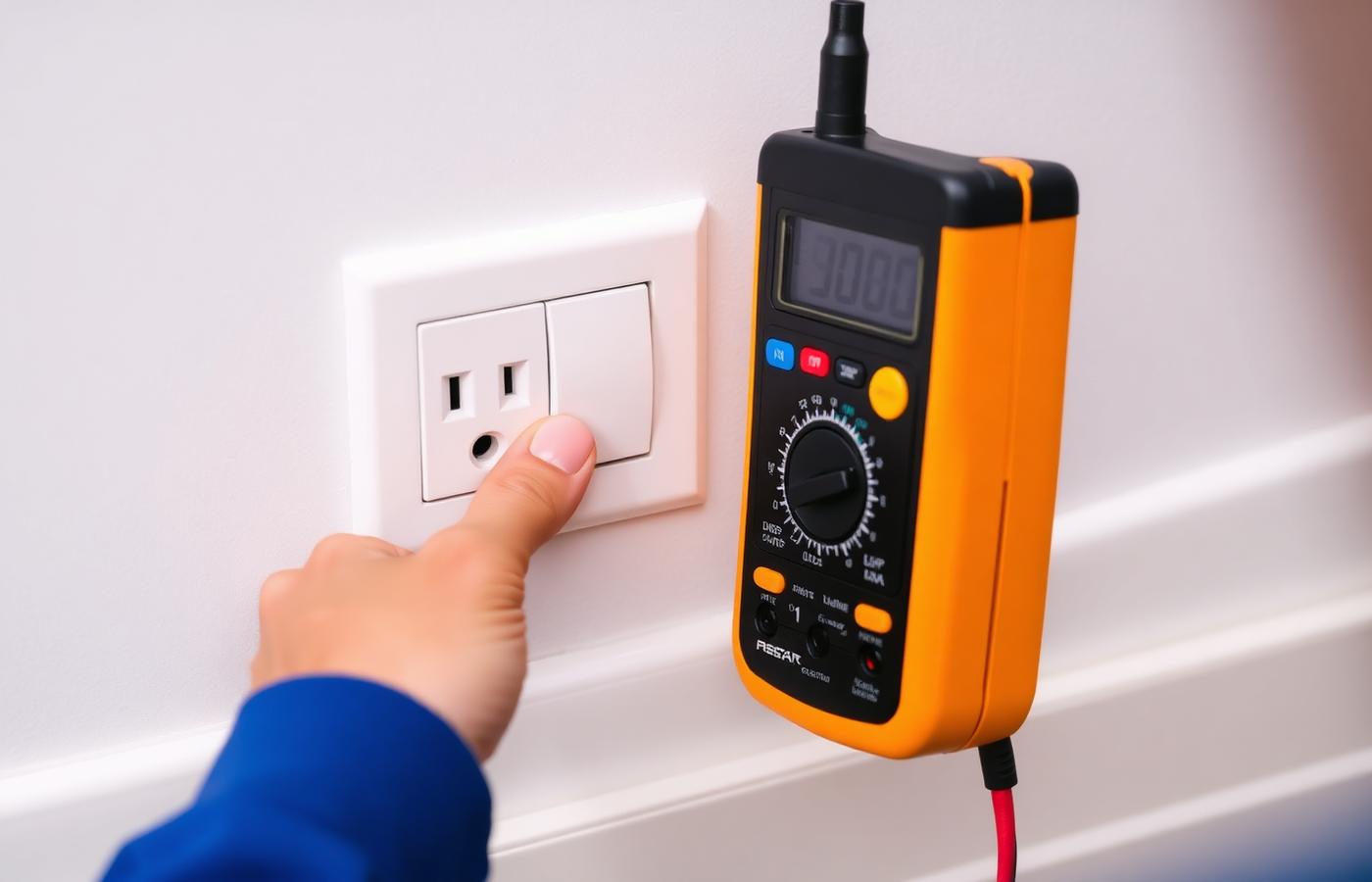
Then we test: insulation resistance, continuity and earth fault loop impedance, splitting circuits down to isolate the section at fault. This is where a professional job differs from guesswork — the aim is to prove where the fault is, not to replace parts until it goes away.
What causes most domestic faults
In our experience the usual suspects are a faulty appliance leaking to earth, moisture in an outdoor socket or light fitting, a cable damaged by a nail or screw, degraded older cable, an overloaded circuit, or a loose connection that has been quietly overheating.
Loose connections deserve special mention: they cause intermittent faults, heat damage and, in the worst cases, fires. They are also easy to find once the right circuit has been identified.
Intermittent faults
Faults that only happen occasionally are the most frustrating for everyone. A pattern is worth recording before we visit — time of day, weather, which appliances were running.
Damp-related faults, for example, often only appear after heavy rain, which points straight at external circuits or a leak affecting cabling.
Repair and reassurance
Once the cause is confirmed we will explain what we found, repair it, and retest the circuit to confirm it is sound.
If testing shows wider problems — perimeter damage, deteriorating cable, an ageing consumer unit — we will set out the options honestly, including what needs doing now and what can wait.
Frequently asked questions
- Why does my socket circuit keep tripping?
- Usually an appliance with a fault, moisture in an outdoor socket, or damage to the cable. Unplugging everything on the circuit and reconnecting items one at a time can point to an appliance, but if it still trips the circuit needs testing.
- How long does fault finding take?
- Straightforward faults are often found within an hour or two. Intermittent or hidden faults take longer because circuits have to be split down and tested section by section.
- One socket has stopped working — is the whole circuit dead?
- Not necessarily. A single dead socket often means a loose connection at that point or at a socket earlier on the circuit. It should still be investigated, as loose connections can overheat.
- Should I keep resetting the breaker?
- No. Repeatedly resetting a device that keeps tripping ignores a real fault and can be dangerous. If it will not stay on, leave it off and call an electrician.
Where we work
We cover homes across east Birmingham and the surrounding towns. See the areas we cover, including Castle Bromwich, Shard End, Hodge Hill, Kitts Green, Stechford and Chelmsley Wood.