
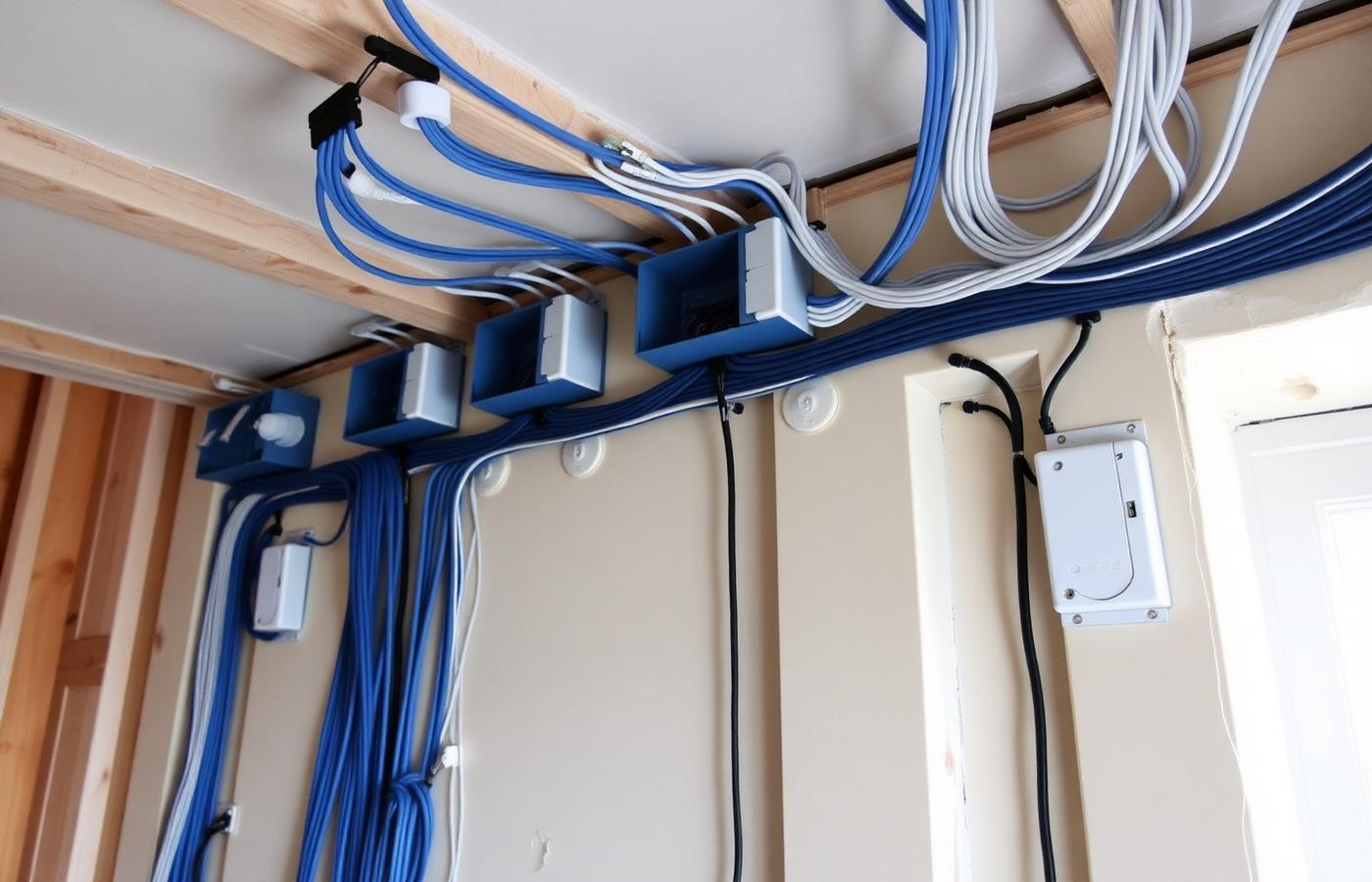
Signs a house may need rewiring
Age alone does not automatically mean a rewire is needed, but certain things point strongly towards one. If several of these apply to your property, it is worth having the installation inspected.
- Rubber, fabric or lead-sheathed cable still in place
- Round-pin sockets, or very few sockets per room
- An old fuse box with rewireable fuses
- Sockets and switches that are cracked, scorched or warm
- Frequent tripping that cannot be traced to one appliance
- No earthing to lighting circuits
- An unsatisfactory EICR listing widespread issues
Older properties in the local area
Much of the housing around east Birmingham is inter-war and post-war stock, and a good proportion of it has been partially updated over the years rather than fully rewired. It is common to find a modern-looking consumer unit sitting in front of original cabling.
We test before quoting so you know what is actually behind the walls, and we will tell you if a partial rewire would serve you better than a full one.
Renovations and extensions
If you are already taking up floors, replastering or extending, that is by far the best time to rewire. Access is easier, disruption is shared with the other trades, and cable routes can be planned properly rather than fudged.
We are happy to work alongside builders, plasterers and kitchen fitters, and to work to a first fix and second fix programme that fits their schedule.
Sockets, lighting and kitchen requirements
Modern homes need far more outlets than older wiring allowed for. We will walk the house with you and agree socket positions room by room, including bedside charging, desks, TV walls and the awkward corner where everything currently runs from one extension lead.
Lighting is planned as circuits rather than as individual fittings, so you can add dimming, two-way switching and separate task or feature lighting later without further disruption. Kitchens get their own attention: appliance circuits, cooker supply, isolators above worktop height and lighting that actually lights the work surfaces.
Consumer unit, testing and certification
A rewire always includes a new consumer unit sized with a sensible amount of spare capacity — useful later for an EV charger, garden room or outside lighting.
Every circuit is tested on completion and you receive an Electrical Installation Certificate with the results. The work is notified under Part P of the Building Regulations.
Keeping disruption manageable
Rewiring is dusty and it does involve chasing walls and lifting floors. What makes the difference is sequencing: working room by room or floor by floor where possible, keeping power available to the parts of the house you are still using, and agreeing in advance what gets made good and by whom.
Some households move out for the messiest week; plenty stay put throughout. We will give you a realistic programme before you commit.
Frequently asked questions
- How long does a house rewire take?
- A typical three-bedroom home usually takes around one to two weeks depending on access, whether the property is occupied and how much making good is included. We give a programme with the quotation.
- Do I have to move out during a rewire?
- Not necessarily. Many customers stay in the property and we work room by room, keeping some circuits live. If floors are coming up throughout, moving out for part of the work can be easier.
- Will you make good the walls afterwards?
- We fill chases and leave the property ready for decoration as standard. Full plastering and decorating can be included or left to your own trades — we will make clear which applies in the quote.
- Does a rewire include a new consumer unit?
- Yes. A full rewire always includes a new consumer unit with individual circuit protection, plus testing and certification.
Where we work
We cover homes across east Birmingham and the surrounding towns. See the areas we cover, including Castle Bromwich, Shard End, Hodge Hill, Kitts Green, Stechford and Chelmsley Wood.