
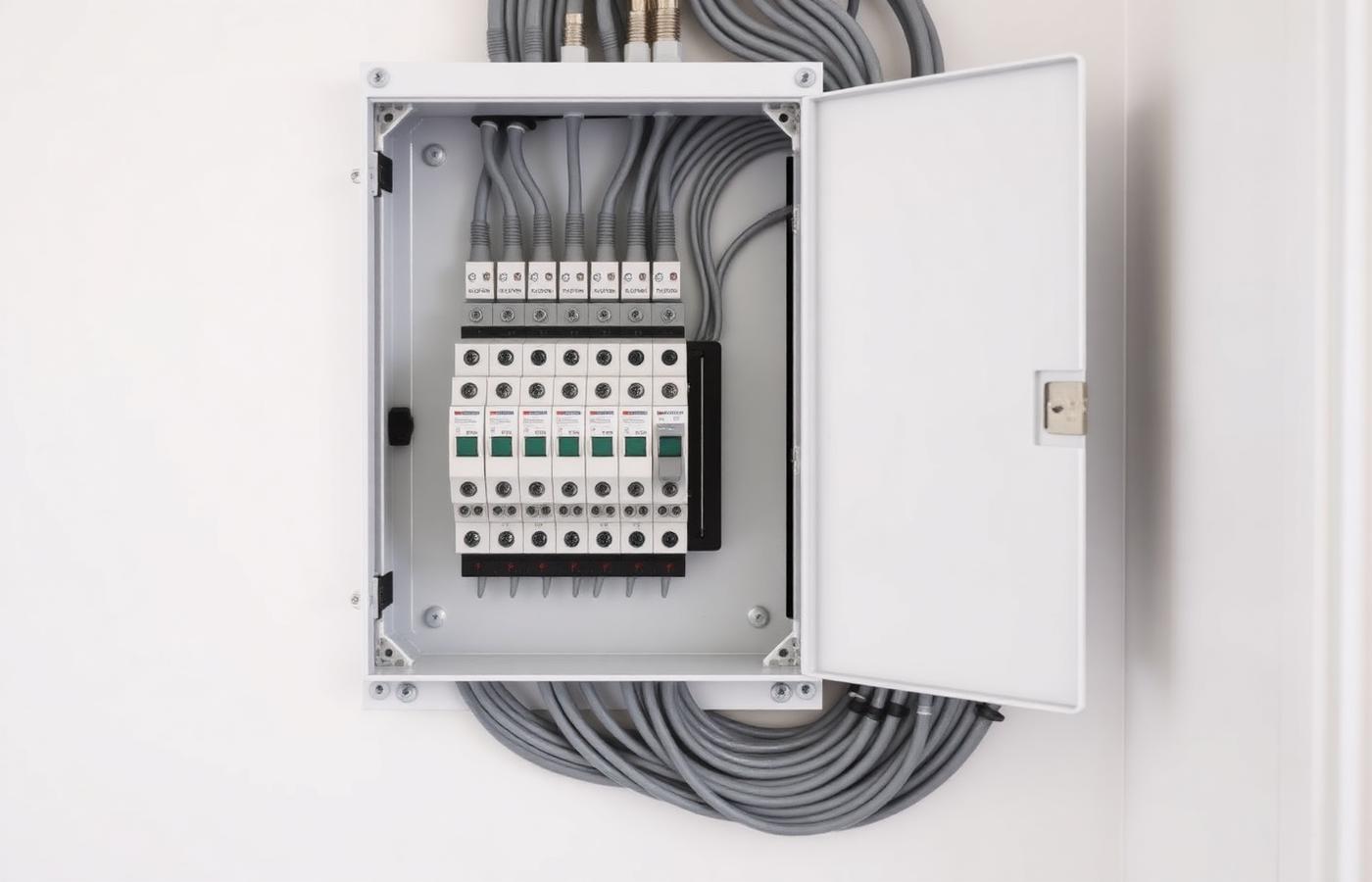
What a consumer unit actually does
The consumer unit — most people still call it the fuse box — is where the incoming supply is split into the individual circuits that feed your lights, sockets, cooker, shower and outbuildings.
Its job is protection. Each circuit has a device that disconnects the supply if too much current is drawn, and modern units add residual current protection that cuts the power within milliseconds if electricity starts flowing where it should not — through a cut cable, a wet fitting or a person.
Why homeowners replace an older board
Plenty of homes are still running on boards installed decades ago. They may work day to day, but they often lack the protection expected today.
- Rewireable fuse carriers or an old cast-iron switchfuse
- No RCD protection at all, or one RCD covering the whole house
- A plastic enclosure being replaced with a metal-clad unit
- No spare ways for an EV charger, garden room or kitchen circuit
- Adding surge protection for sensitive electronics
- A board that is damaged, overheating, buzzing or discoloured
Signs an inspection may be worthwhile
You do not need to wait for something to break. If breakers trip for no obvious reason, if the board feels warm, if there is a smell of hot plastic, or if you have never had the installation tested, an inspection is sensible.
It is also worth checking before a big project. Replacing the board first often makes a rewire, kitchen refit or EV charger installation simpler and more affordable overall.
What happens during a replacement
We start by testing the existing circuits so there are no surprises once the old board comes off the wall. Any pre-existing faults are flagged to you before work begins.
The supply is then isolated, the old unit removed, and the new unit installed with the circuits identified, labelled and individually protected — usually with RCBOs, so a fault on one circuit no longer takes out half the house. Most straightforward replacements are completed within a day.
Testing and certification
Every circuit is tested after installation and you receive an Electrical Installation Certificate recording the results. The work is notified under Part P of the Building Regulations.
Keep the certificate safe — it is routinely asked for when you sell the property, arrange insurance or let the house out.
Why this is not a DIY job
Replacing a consumer unit means working at the origin of the installation, close to unfused supply conductors, and it is notifiable work. It also requires calibrated test equipment to prove the circuits are safe afterwards.
As an NICEIC Approved Contractor we can carry out and certify the work directly, without you needing to arrange a separate building control inspection.
Frequently asked questions
- How do I know if my consumer unit needs replacing?
- Common signs are rewireable fuses instead of breakers, no RCD protection, nuisance tripping, a warm or buzzing board, scorch marks, or no spare capacity for new circuits. An inspection will confirm whether replacement is genuinely needed or whether repairs will do.
- How long does a consumer unit replacement take?
- A typical domestic replacement takes most of a day, including testing and paperwork. Larger properties, additional circuits or remedial work found during testing can extend that.
- Will my power be off all day?
- The supply is off while the board is changed, but we work to keep that period as short as practical and can usually plan around anything critical in the house.
- What is the difference between an RCD and an RCBO board?
- An RCD board groups several circuits behind one protective device, so a single fault can disconnect all of them. An RCBO board gives each circuit its own protection, so a fault only affects that one circuit.
- Do I get a certificate?
- Yes. You receive an Electrical Installation Certificate with the test results, and the work is notified under Part P.
Where we work
We cover homes across east Birmingham and the surrounding towns. See the areas we cover, including Castle Bromwich, Shard End, Hodge Hill, Kitts Green, Stechford and Chelmsley Wood.