
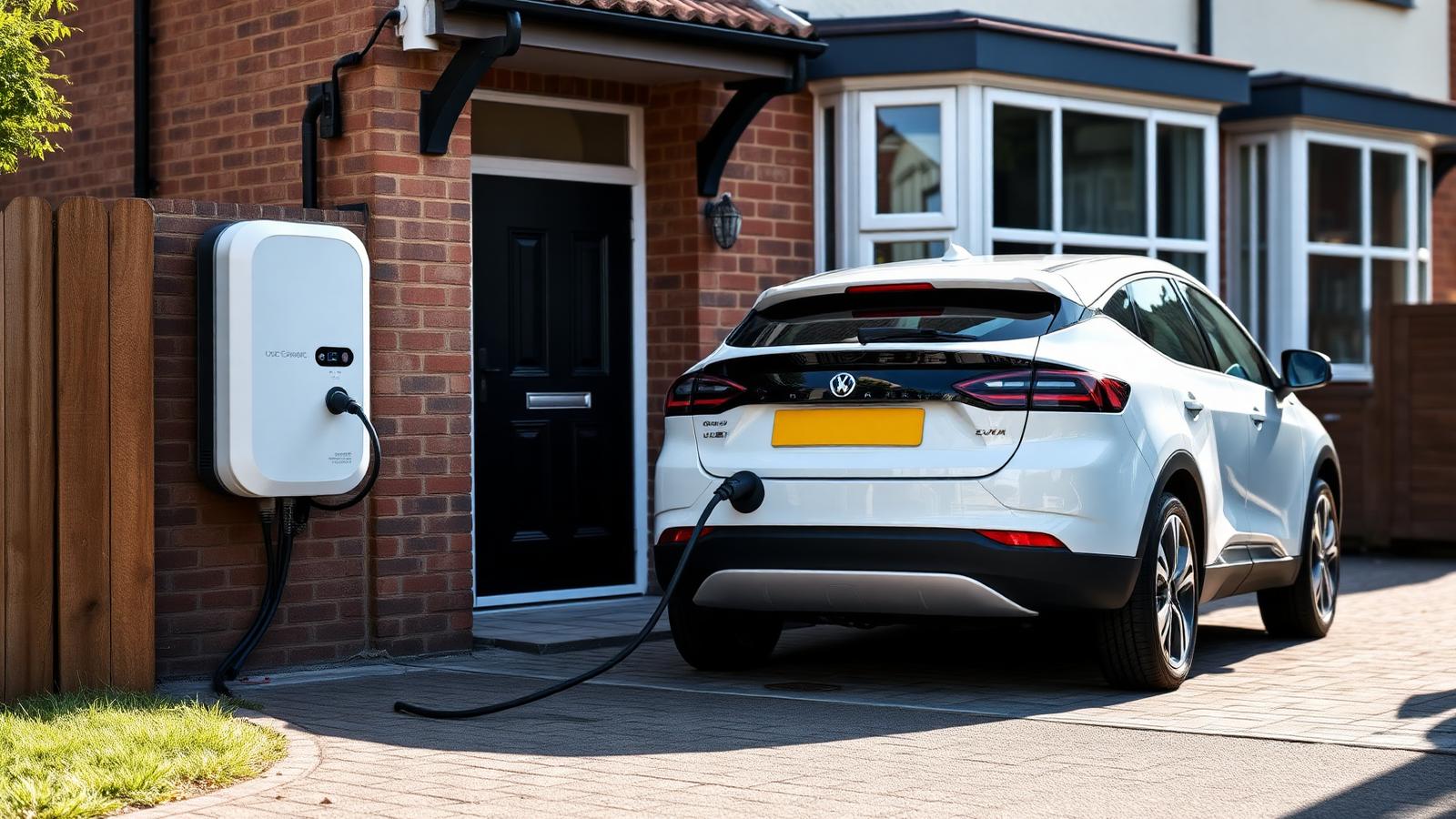
Everything a home driver needs from an EV charger
A dedicated home EV charger is safer, faster and more affordable to run than trickle charging from a standard 3-pin socket. A 7.4kW unit delivers around 25 miles of range per hour, which means most drivers wake up with a full battery every morning.
We install every unit to the manufacturer's specification, using the correct RCBO or Type B RCD protection, dedicated cabling and PEN fault protection where required by BS 7671.
Smart charging, tariffs and solar
Every charger we install is a smart charger, compliant with the UK's Electric Vehicles (Smart Charge Points) Regulations 2021. That means it can be scheduled around affordable overnight tariffs such as Octopus Intelligent, Cosy or Go, so you only draw power when electricity is most affordable and greenest.
If you already have solar PV or a home battery, we can specify a charger that diverts surplus solar directly into your car, so you drive on electricity you have generated yourself.
Site survey, install and handover
We start with a short remote or on-site survey to confirm your supply capacity, cable route and preferred charger location. Most installations are completed in half a day with minimal disruption.
Once installed we test the whole circuit, issue an Electrical Installation Certificate, notify your DNO, register the charger with the manufacturer, and walk you through the app so you can control charging from your phone.
Frequently asked questions
- Which home EV charger do you recommend?
- We install Ohme, Zappi, Pod Point, Hypervolt and Wallbox chargers. The right one depends on your tariff, whether you have solar PV, and how tidy you want the cable to look. We give an unbiased recommendation during the survey.
- Do I need to be at home during the installation?
- Yes. We need access to your consumer unit and the outside wall where the charger will be fitted, and we ask you to be present at handover so we can walk you through the app.